
Themes
explains Maxime Tavernier, sustainability engineer at Recticel.
There is no getting around it: PIR and PUR work great as insulation, but they are not ecological. The plastic foam consists mainly of three elements: MDI (methylenediphenyl diisocyanate), polyol and pentane. MDI in particular is a difficult product to get from a fully sustainable source.
- Replacing MDI
"We have therefore been working for years to address that problem," explains sustainability engineer Maxime Tavernier. "It is not easy to replace MDI with a more sustainable alternative agent that has a similar effect. However, more and more manufacturers are coming on the market with an MDI version that already partly consists of sustainable raw materials."
Those sustainable raw materials have often already gone through a whole life cycle, like frying oil for example. "They are not yet available in large quantities, but the volume is increasing every year."
- Circularity
"What we do have more control over is making our insulation as circular as possible," Maxime continues. "For example, the rigid insulation boards for flat roofs can be recovered at the end of the building's lifetime, provided you don't glue them together and the roof is well maintained."
This is why Recticel is betting on techniques to install the boards according to the principles of eco-design so they can be more easily detached from the rest of the structure later. "The techniques exist and our products are adapted. But the contractors who install them also have to be along for the ride. That takes time."
Whether it will ever be 100 per cent possible to recycle insulation boards? "In any case, we will make the necessary efforts to achieve recycling solutions."
- Chemolysis
Recticel is also looking for solutions to reuse the basic chemical components. "With chemolysis, we break down the components in the rigid foam back to the basic components. That way we don't have to process new MDI and polyol each time." - Collecting cutting waste
On a construction site, there is also a lot of cutting waste. "On a large construction site, insulation waste can add up quickly," Maxime explains. "That's why, in collaboration with Essencia,we started a pilot project to collect waste from large construction sites. We supply big bags into which contractors throw their waste and we collect it. A specialised firm sorts the waste so it can be reused in new products."
All actions together should minimise the impact of insulation on the climate.
Read More
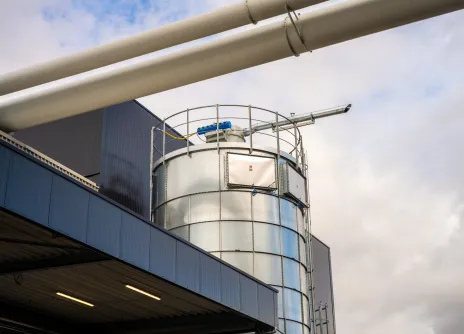
Recticel Insulation: PIR recycling to Polyol Plant
Sustainability & Circularity
Sustainable roofing: five steps to improve sustainability, reduce waste, and maximise performance
Sustainability & Circularity
Flat Roof - The Correcticel Way
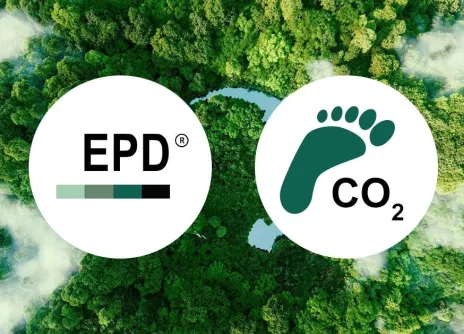
What is the difference between an EPD and carbon footprint?
Sustainability & Circularity
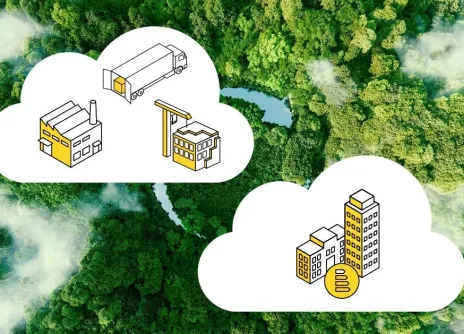
What is the difference between 'embodied carbon' and ‘operational carbon'?
Sustainability & Circularity

Making insulation boards as carbon-neutral as possible: an approach on several fronts
Sustainability & Circularity
The road to a circular future: this is how Recticel is tackling it
Sustainability & Circularity
Recticel accelerates climate action by joining the science based targets initiative (SBTi)
Sustainability & Circularity

High quality insulation schemes remain key to low carbon homes' drive
Benefits of PIR
Sustainability & Circularity
Paul Simpson discusses sustainability with Fabrick for 'London Climate Action Week 2021'
Sustainability & Circularity