
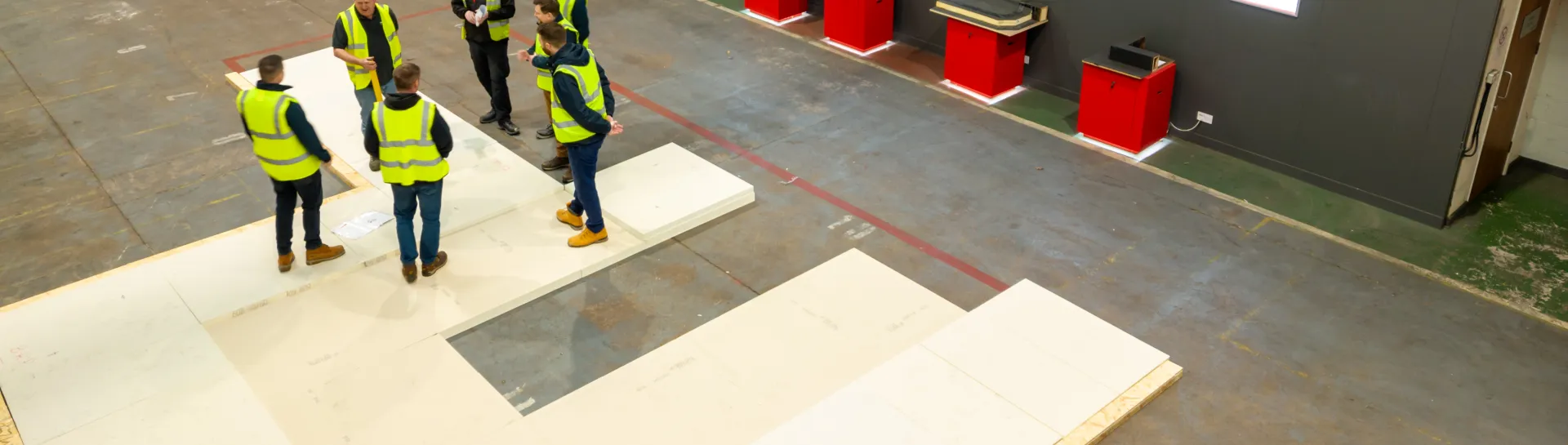
Knowledge Hub
In our Knowledge Hub, you will find practical tips, in-depth articles, and valuable insights on topics such as building regulations and Correct U-value assessments. Whether you're looking for answers, trends, or handy tools – everything is conveniently located in one place here.
Our Topics
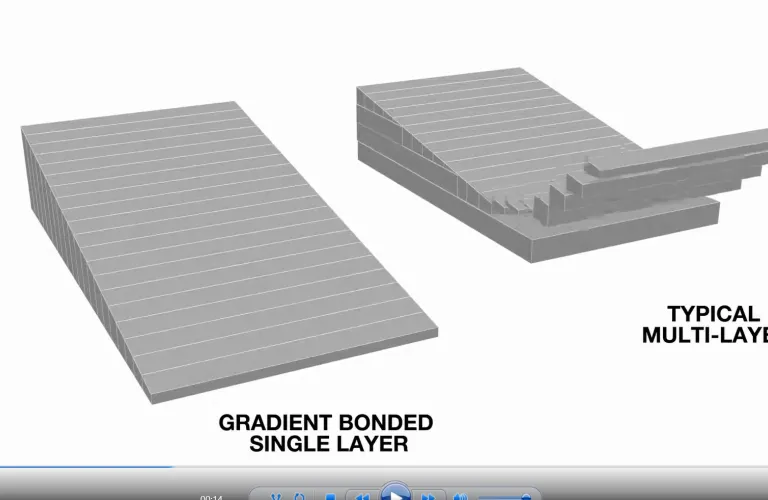
Discover the key differences between single‑layer and multi‑layer flat roof insulation, and why fewer layers can deliver better performance.
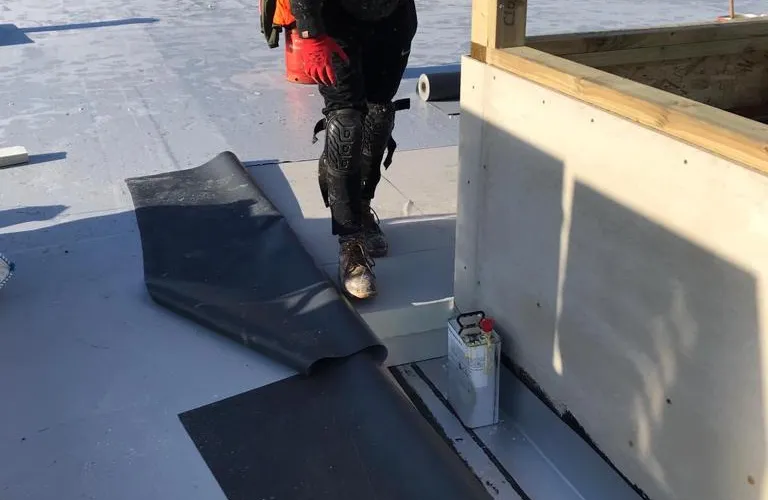
Explore the most common flat roofing issues, what causes them, and how the right insulation and design approach can prevent problems before they occur.

Delve into the key aspects of the Building Safety Act and Building Regulations Part L regulations and their implications for the construction industry.
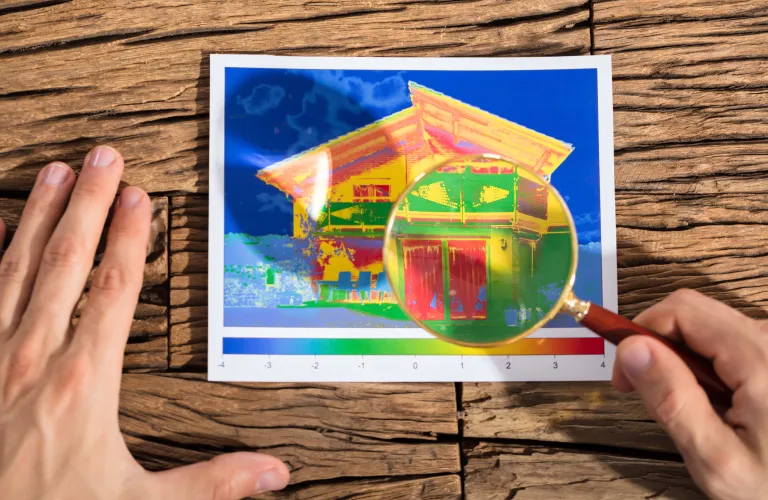
Correct U-value calculation could be the difference between success and failure in terms of a building’s compliance with current energy regulations.
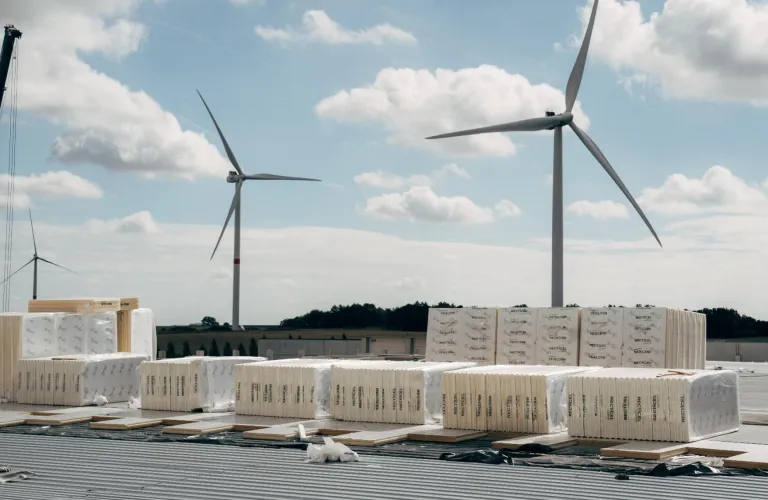
A joined-up approach to sustainability, combining efficient manufacturing, smarter design, and reduced on-site waste.
Latest Articles

The Specifier’s Checklist: 6 Questions to Ask Before You Specify Flat Roof Insulation
Bridging the Performance Gap in Roofing Projects
Futureproof your roof: meeting evolving flat roof insulation regulations

Langley and Gradient: Building trust through expert flat roof insulation
Construction law & regulations
Are thermal calculations done in the same way for all building elements?
Generally speaking, yes - all calculations are done by the 'combined method'. However, ground floors differ slightly from other building elements in the information that is required. If requesting a calculation for a ground floor, please ensure that you provide a floor area and length of the exposed perimeter (i.e. the length of new floor along outside-facing walls). This allows us to calculate a perimeter/area ratio, which is crucial in the floor calculation.
Can a breather membrane be laid directly over insulation boards?
Different breather membrane manufacturers have different guidelines for their products, and these should always be consulted prior to installation. It may be possible to lay the breather membrane on the insulation, but with a counter batten airspace above.
If you would like to discuss application of any specific project, please contact our Technical Services.
Can I recess cables into PIR insulation boards?
Cables should not be recessed into the insulation boards. They may be laid between two layers of boards with the cabling oversized to accommodate for an increase in operating temperature. If cables penetrate an insulation layer, PIR will have no detrimental effect on cable sheathing.
Further guidance on the above should be obtained from a qualified electrician.
How thick do I need to insulate?
We recommend that you seek advice from your architect, designer, energy assessor etc. to determine the appropriate insulation thickness. If you already know the desired performance, you can contact our Technical Services team for U-value calculations or look up the required R-value and corresponding thickness in the technical datasheet.
The cleanest energy for heating and cooling, is the energy you do not have to use. That is why we recommend to insulate a flat roof to a higher standard than the minimum requirement. We recommend a minimum of 45 mm Deck-VQ® (Lambda (λ) = 0,009 W/mK) for renovation and 60 mm (Lambda (λ) = 0,008 W/mK) for new build.
Speak with our technical experts
Vacuum insulation
Can I walk on Deck-VQ® vacuum insulation panels?
Yes, this is possible due to the protection layers in high density PIR and the compressive strength of 150 kPa (CS(10\Y)150). Deck-VQ® is suitable for application in flat roofs and terraces, subject to light foot traffic.

As for every type of insulation, we recommend to limit the foot traffic during installation to a minimum and apply the waterproofing as soon as possible after installation. It is best practice to only install the area you are able to insulate AND waterproof in one day.
Can you drill, nail or saw into a Vacuum Insulation Panel?
No, because these actions will lead to the loss of vacuum in the VIP and reduce the thermal performance by a factor of three*.
Our Deck-VQ® concept offers an optimum protection to prevent most damage on site. (see “What is the difference between Deck-VQ® and a Vacuum Insulation Panel?”).
Our technical services provide guidance and deliver a detailed design for your project.
Do not hesitate to contact us for further information.
*The thermal conductivity of the core material rises to ca. 0,020 W/mK under ambient pressure.
What is a Vacuum Insulation Panel or VIP?
VIP is the abbreviation of Vacuum Insulation Panel. A Vacuum Insulation Panel generally comprises a microporous core material (e.g. based on fumed silica), which is introduced into a high barrier multilayer foil envelope. The envelope is then evacuated and sealed, obtaining a near vacuum inside the envelope.
Because of the microporous core and the absence of air, excellent thermal properties are obtained. For our Vacuum Insulation Panel as such (Core-VQ®) we can declare a lambda value of 0,006 W/mK, which is typically 3-5 better than traditional insulation materials.
Vacuum Insulation Panels have already been used for several decades in high demanding applications, especially when stringent requirements for thermal insulation are set (e.g. refrigerators). As the thermal insulation of buildings has become increasingly important over the last years, Vacuum Insulation Panels have been introduced in buildings to meet the high standards.
Recticel Insulation offers the following products:

Moisture & condensation
What is the best way of achieving an air and vapour barrier when using PIR insulation panels?
As per the literature supplied with the product - an effective air and vapour barrier can be achieved by the taping of board joints using suitable insulation tape, the inclusion of a separate proprietary vapour control layer or the use of a foil backed plasterboard all of these methods are acceptable forms of air/vapour control.