Interior
Practical insulation for internal applications — with expert support to get it right.
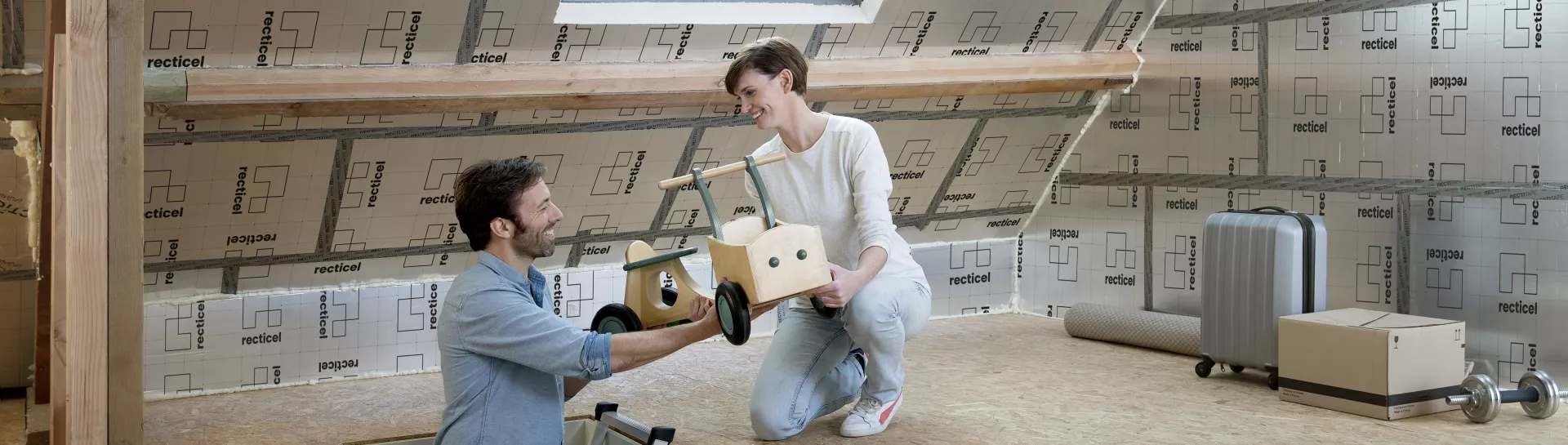
Not every building can be insulated from the outside. Listed buildings, terraced properties, tight urban sites, and retrofits where external cladding isn't viable all present the same challenge: how do you meaningfully improve a building's thermal performance when you're working from the inside?
Internal insulation is the answer - but it needs to be done carefully. Get it right and you can dramatically improve comfort, reduce energy bills, and bring an older building up to modern performance standards with minimal disruption to the exterior. Get it wrong and you risk creating condensation problems, cold spots, or a result that simply doesn't deliver the performance expected.
Gradient's PIR insulation boards are a strong choice for internal applications, and our team can help you navigate the design decisions that make the difference between a successful internal insulation scheme and a problematic one.
What internal insulation needs to do well
The core requirement is straightforward: add meaningful thermal resistance to the wall, floor, or ceiling without consuming more floor area than necessary. PIR insulation is one of the most space-efficient rigid insulation available.
But beyond the thermal performance, internal insulation needs to be detailed correctly to manage moisture. Moving insulation to the warm side of the wall changes the temperature profile through the structure, and without proper attention to vapour control and airtightness at junctions, this can create conditions for interstitial condensation. It's not a reason to avoid internal insulation, it's a reason to specify it thoughtfully, with the right technical guidance behind the design.
That's exactly the kind of support Gradient's team is set up to provide.

When walls need to work harder: Deck VQ for space-critical interiors
Internal wall insulation always involves a trade-off: the better the thermal performance, the more floor area you lose. In most situations, PIR handles this well, its high thermal efficiency means you can achieve strong U-values in a relatively slim build-up. But in some projects, even a standard PIR thickness is too much to give up.
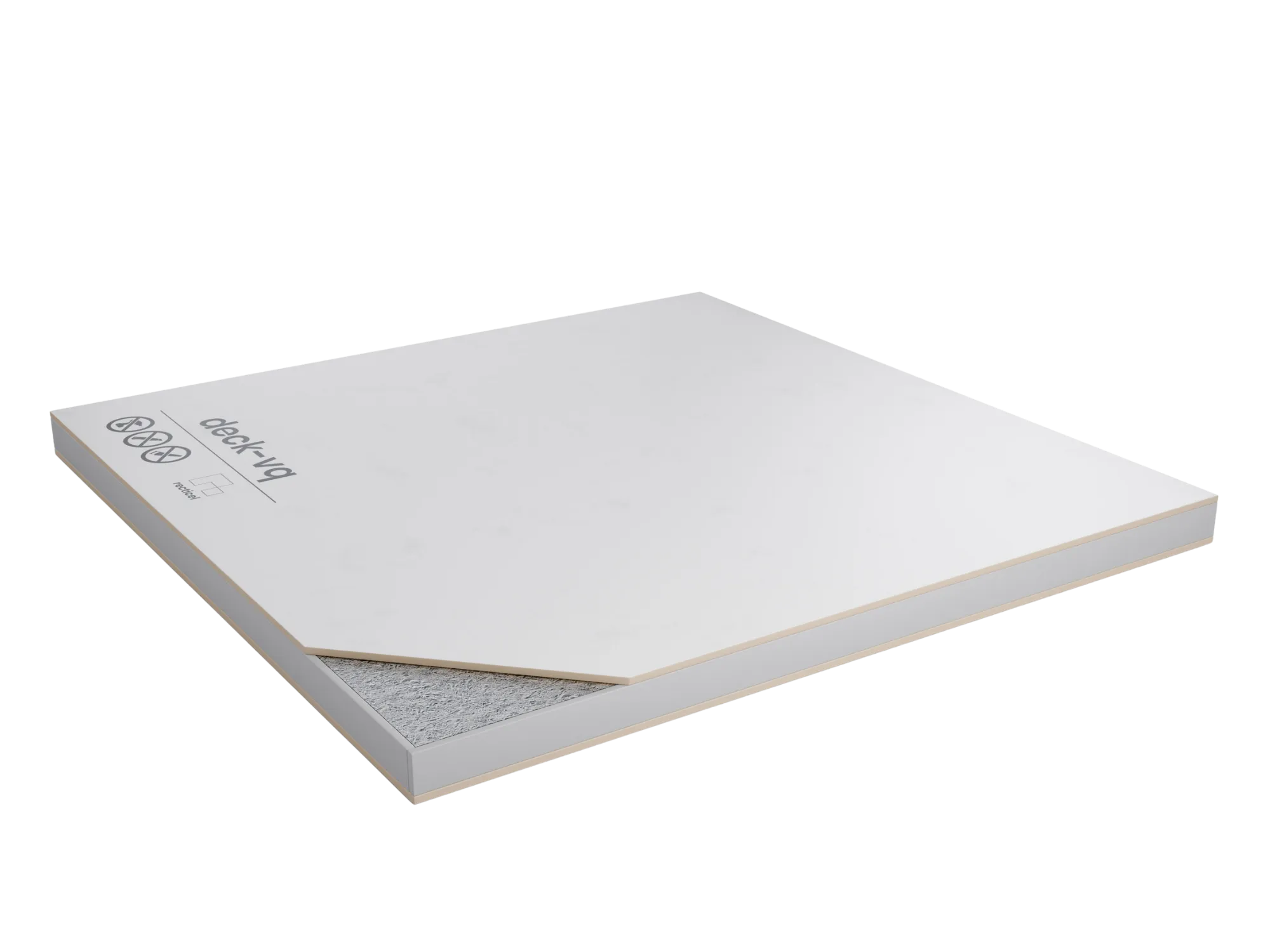
That's where Deck VQ comes in. Our vacuum insulation panel product delivers exceptional thermal resistance in a fraction of the thickness of conventional insulation, making it the right tool for situations where space is genuinely at a premium.
For narrow hallways, compact apartments, listed buildings where wall profiles are tightly constrained, or any room where losing 80–100mm to insulation simply isn't acceptable, Deck VQ allows the thermal target to be met without the spatial penalty. The panels are specified and installed as part of a designed build-up, and Gradient's technical team can advise on detailing, junctions, and compatibility with other elements of the wall construction. To give you an idea, in a typically apartment in London, up to the space of a shower (3m²) can be saved by using Deck-VQ instead of classical MW insulation, having a tremendous impact on property value.
It's a premium solution for situations that demand it and one that opens up internal insulation as a viable option in buildings where conventional approaches would compromise the space too much to be practical.