
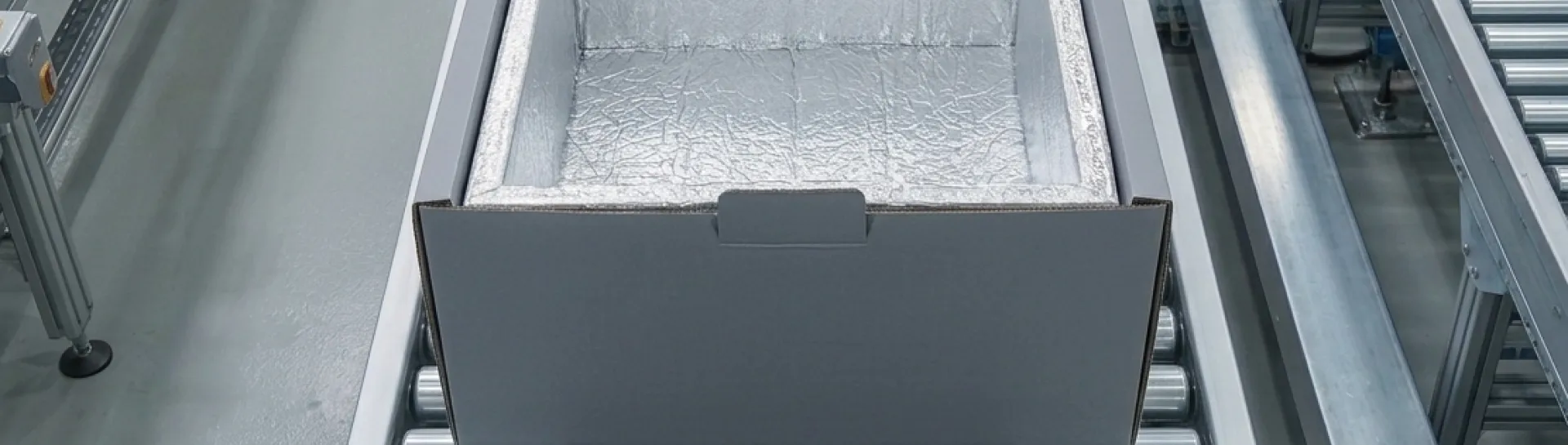
Packaging
High-performance insulation for temperature-sensitive packaging — keeping products protected from production to delivery.
When a product leaves a controlled environment and enters the supply chain, the packaging it travels in becomes the last line of defence against temperature excursion. For pharmaceuticals, biologics, clinical samples, premium food and drink, or any other goods where temperature integrity is non-negotiable, that's a significant responsibility to place on a box.
Insulated packaging that performs well doesn't happen by accident. It starts with insulation material that genuinely holds temperature efficiently, consistently, and within a format that's practical to produce, fill, ship, and where required, return or dispose of responsibly. Gradient's expertise in high-performance insulation extends into this space, and we work with packaging designers, manufacturers, and brands to develop solutions that protect what's inside and hold up to the realities of real-world logistics.
If you're developing or sourcing insulated packaging for temperature-sensitive products and you're not confident your current solution is giving you the performance margin you need, we'd like to talk.
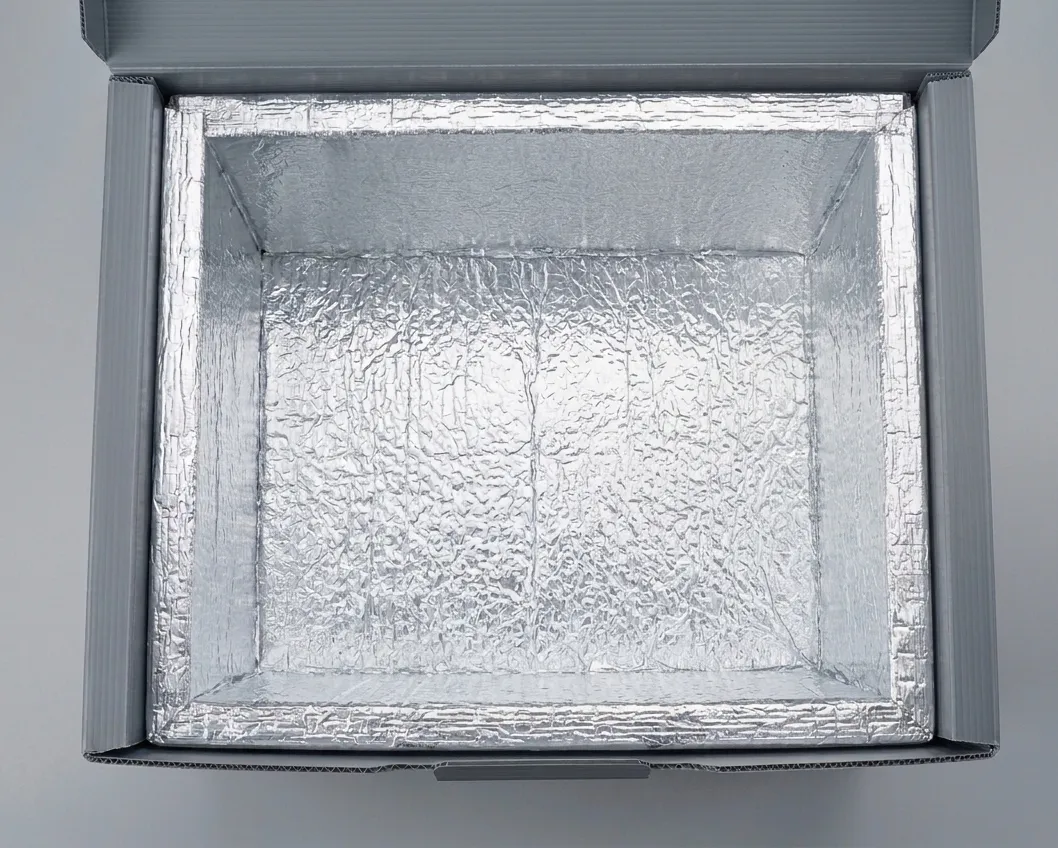
Choosing the right insulation for your packaging application
EPS — StandardEPS is the most widely used insulation material in temperature-controlled packaging, and it has earned that position through reliability, versatility, and cost-effectiveness. It's easy to mould and fabricate into precise box shapes and liner configurations and is well suited to applications where pack size isn't tightly constrained and the thermal requirement is moderate. Where EPS reaches its limits is in applications that demand more from a smaller space: its higher lambda value means achieving longer transit times or tighter temperature tolerances requires proportionally thicker walls — which adds bulk, reduces the ratio of product to packaging, and can push up shipping costs as dimensional weight increases. |
PIR — BetterPIR insulation delivers roughly twice the thermal performance per millimetre compared to EPS, which in a packaging context translates directly into thinner walls for the same thermal target or better thermal performance for the same wall thickness. For applications where pack size and weight are commercially significant, the efficiency gain is meaningful: more product per shipment, lower dimensional weight, and a more competitive packaging footprint without sacrificing temperature integrity. PIR is particularly well suited to mid-range transit applications where EPS would technically work but at a size or weight penalty the product economics can't absorb. |
VIP (Vacuum insulation panels) — BestWhen the thermal requirement is demanding and the packaging envelope is tightly constrained, vacuum insulation panels set a standard that no conventional insulation can match. Gradient's Deck VQ VIPs achieve thermal resistance values that would require many times the material thickness from EPS or PIR - making them the solution of choice for ultra-cold pharmaceutical shipments, high-value perishable goods, or any application where every millimetre of wall thickness directly affects the usable volume of the pack. VIP technology enables packaging designers to hit aggressive thermal targets in the slimmest possible profile, opening up pack geometries that simply aren't achievable with conventional materials. All our VIPs are produced in EU, offering you fast lead times and close collaboration on your project. As Gradient can offer both PIR and VIPs, we are in a unique situation to optimise your packaging need as a reliable partner. |