Modular Systems
Insulation solutions designed for the demands of modern modular construction.
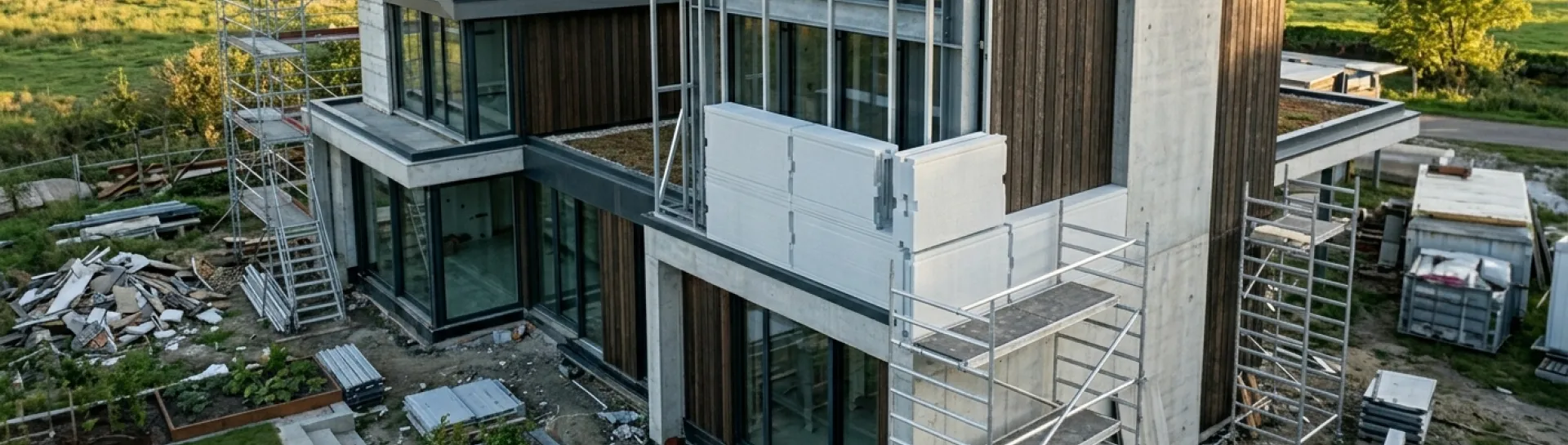
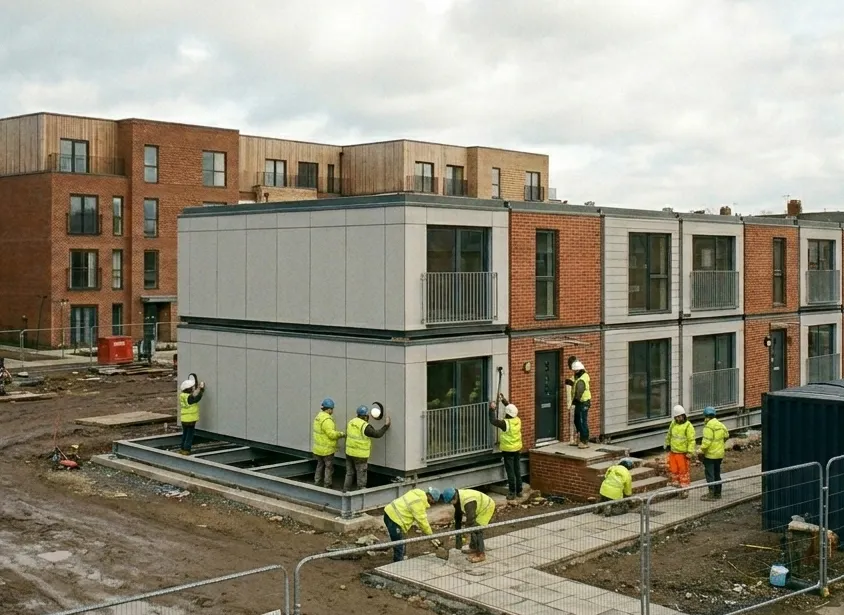
Modular construction is changing the pace and quality of building delivery across the UK. With units manufactured in controlled factory environments and assembled on site in a fraction of the time of traditional methods, the approach offers real advantages — but it also demands components that perform to the same tight standards as the structure itself.
Insulation is no exception. In a factory-built system, there's no room for boards that vary in thickness, shift under load, or absorb moisture in transit. Every element needs to be right before the module leaves the factory floor. That's where Gradient comes in.
We work with modular manufacturers and specifiers at the design stage to ensure the insulation is properly integrated into the build-up from the outset. Whether you're insulating roofs, floors, or wall panels within a modular unit, our team can help you select the right product, optimise the build-up depth, and meet your thermal performance targets without adding unnecessary weight or complexity to your system.
What makes modular different — and why it matters for insulation
The constraints of modular construction are unique. Spatial tolerances are tighter than in traditional construction, build-up depths are often fixed by the panel design, and there's very little opportunity to correct specification errors once the unit is assembled. Thermal bridging at module junctions is another consideration that needs to be designed out early — heat loss at these interfaces can be significant if the insulation strategy isn't thought through carefully at the design stage.
Gradient's PIR insulation boards address these challenges directly. Combining high thermal performance with slim profiles, consistent dimensional tolerances, and low moisture absorption, they're well suited to the demands of factory manufacture and the varied conditions of transport, storage, and on-site assembly.
Available cut-to-size, they help manufacturers reduce processing time, improve production efficiency, and minimise material waste.
Deck-VQ: The Slim-Profile Solution for Modular Roofs
In modular construction, the roof build-up is often one of the least flexible elements of the panel design. Once structural depths are set, there's limited room to add insulation thickness which means thermal performance targets can only be met by using an insulation that works harder in the space available.
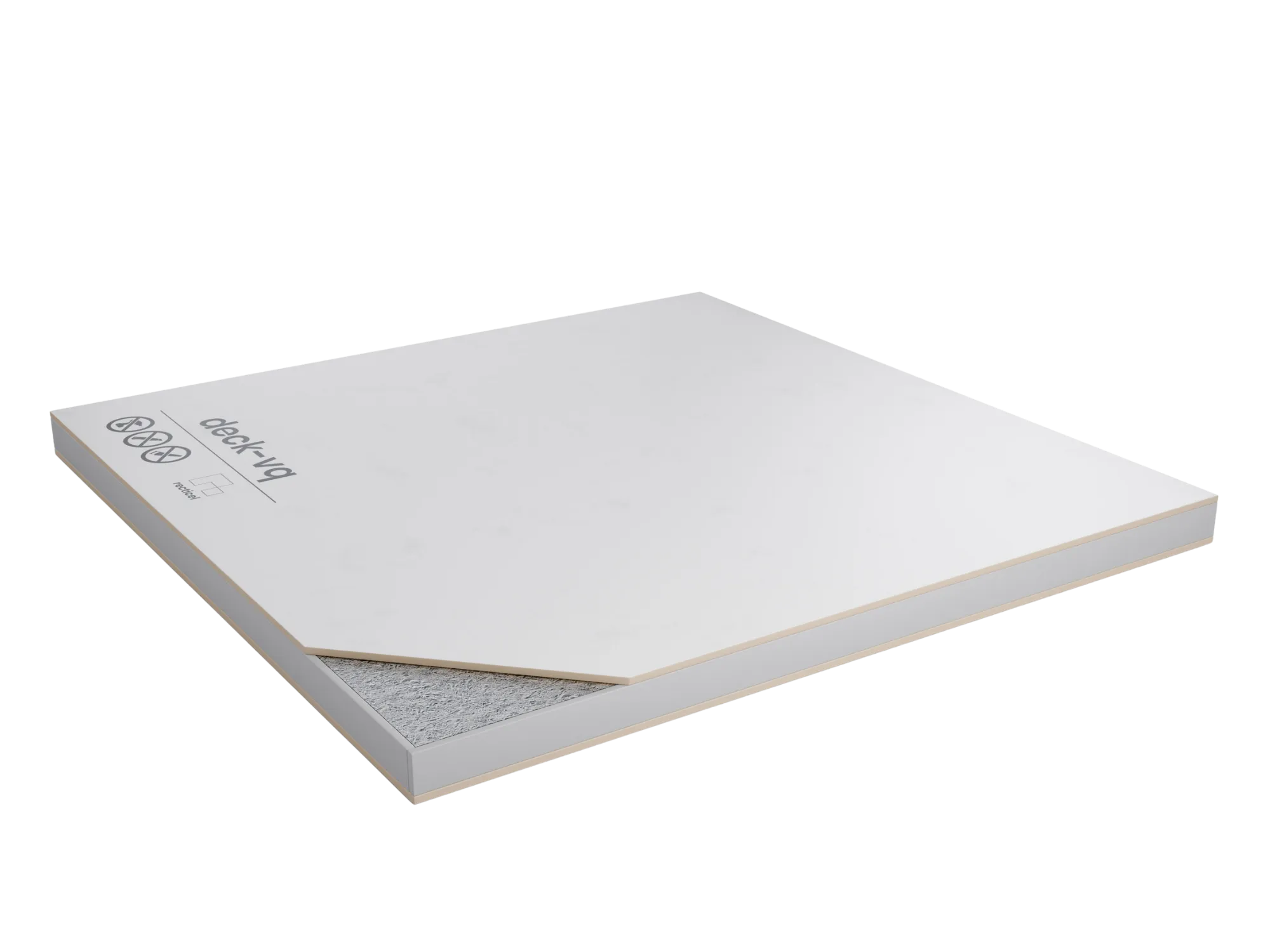
Deck-VQ is designed for exactly this challenge. Based on encapsulated Vacuum Panel Insulation (VIP) technology with a core lambda of 0.006 W/mK, it delivers thermal resistance values that conventional PIR or mineral wool simply can't match at equivalent thicknesses. At just 60 mm, Deck-VQ achieves an R-value of 7.50 m²K/W - performance that would require a far greater depth with standard insulation products.
For modular roof panels, this translates directly into real design freedom. Manufacturers can hit demanding U-value targets without modifying panel dimensions, adding structural depth, or compromising on other elements of the build-up.