Underfloor heating solutions
Insulation that makes your underfloor heating system work smarter — and cost less to run.
Underfloor heating has become a go-to choice for homeowners, developers, and commercial specifiers alike. The appeal is obvious: even, comfortable warmth across the entire floor surface, no radiators to work around, and a system that integrates neatly into the building fabric. But there's a version of underfloor heating that works brilliantly and a version that disappoints and the difference often comes down to what's underneath the pipes.
Without the right insulation beneath a UFH system, heat doesn't just travel upwards into the room. It travels in every direction, including down into the floor structure and that wasted energy shows up in your running costs. The better the insulation beneath the system, the more efficiently it operates, the faster it responds to thermostat changes, and the lower the bills.
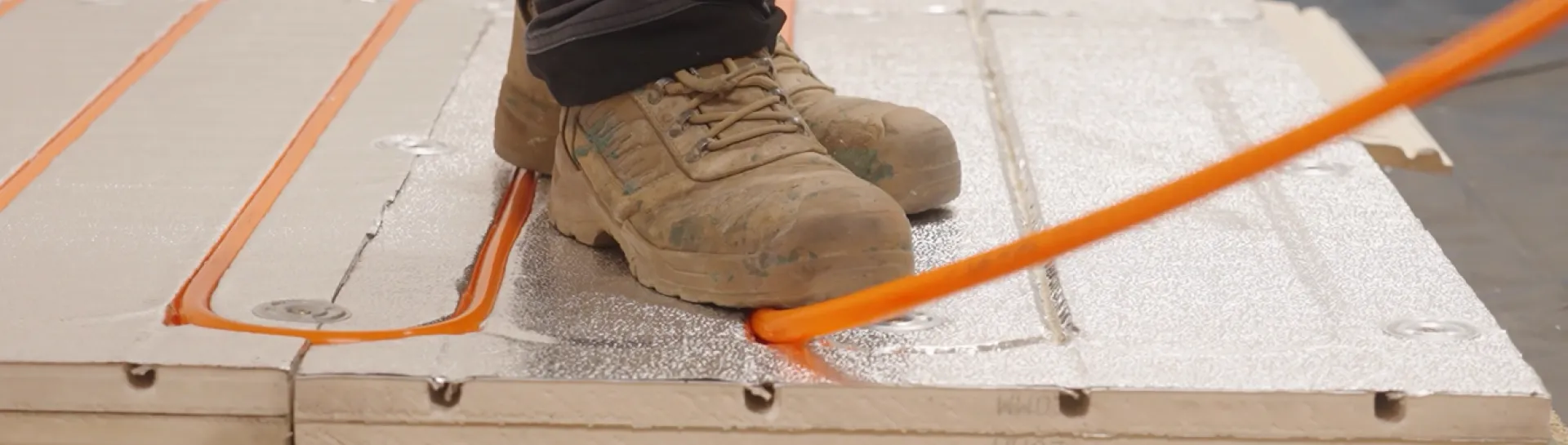
Gradient's PIR insulation boards are designed to maximise the performance of underfloor heating systems, directing heat where it's needed and helping specifiers meet the building regulation requirements that govern insulation beneath UFH installations. And if you're not sure what's required for your specific project, our team can help you work it out.
Getting the build-up right
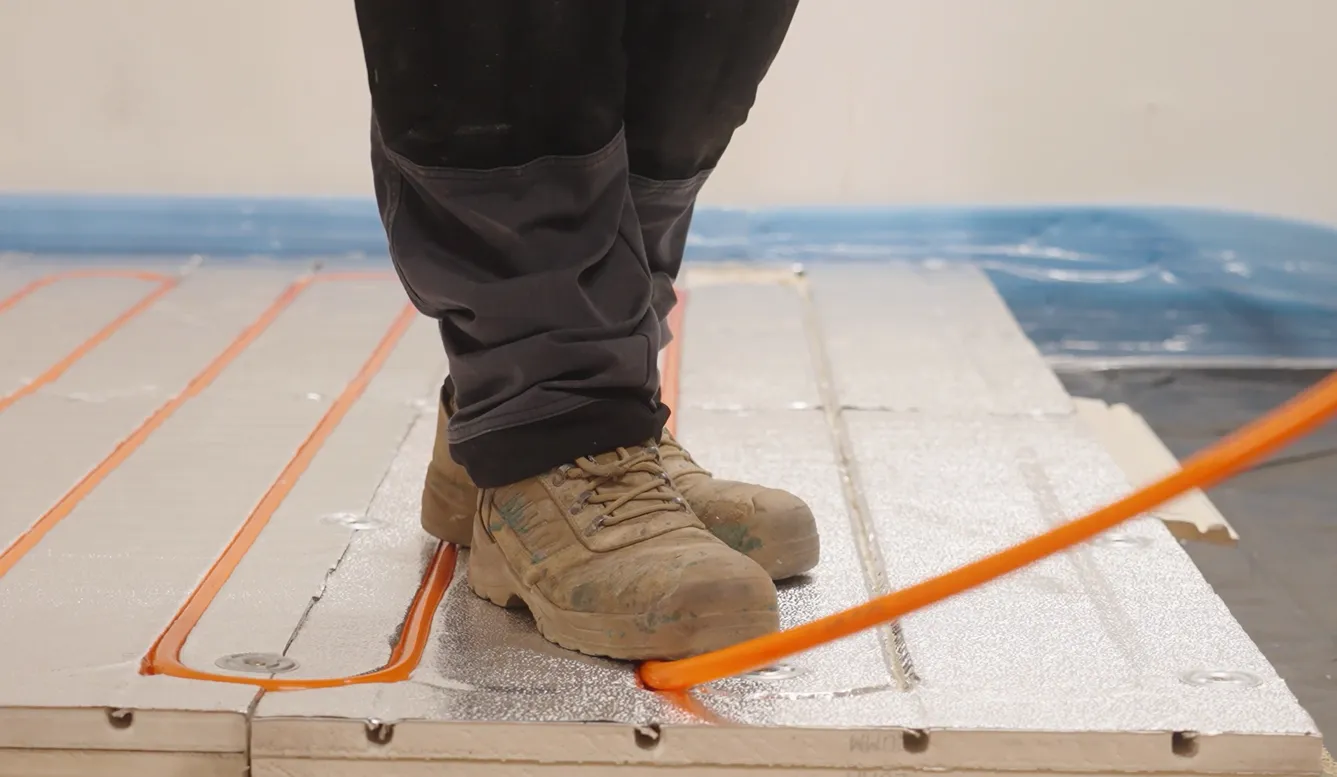
The key challenge in UFH insulation is balancing thermal performance against floor build-up depth, particularly in retrofit projects, where floor-to-ceiling heights, door thresholds, and existing floor levels leave little room to manoeuvre.
PIR insulation's high thermal resistance per millimetre makes it the most practical solution in these situations. Gradient boards allow the required R-value to be achieved in a slimmer profile than mineral wool or EPS alternatives, keeping the overall build-up as shallow as possible without compromising on efficiency. Current building regulations set minimum performance requirements beneath UFH systems, and our technical team can advise on what's needed for your project and where it makes sense to go beyond the minimum.
Compressive strength matters too. The insulation beneath a UFH system needs to support the weight of the screed, the floor finish, and the full imposed loads from furniture and occupants over the life of the building. Gradient boards offer compressive strength of ≥150 kPa, ensuring the build-up remains stable and the screed above stays crack-free.
When the floor can't afford to rise
PIR is already the most space-efficient conventional insulation for underfloor heating applications. But in some projects, even the slimmest PIR build-up isn't slim enough.
Retrofits into existing ground floors are the classic example: door thresholds fixed in place, step heights already at minimum, adjacent floor levels that can't move. In situations like these, the choice is often between compromising on thermal performance or not doing the project at all, unless there's a better option available.
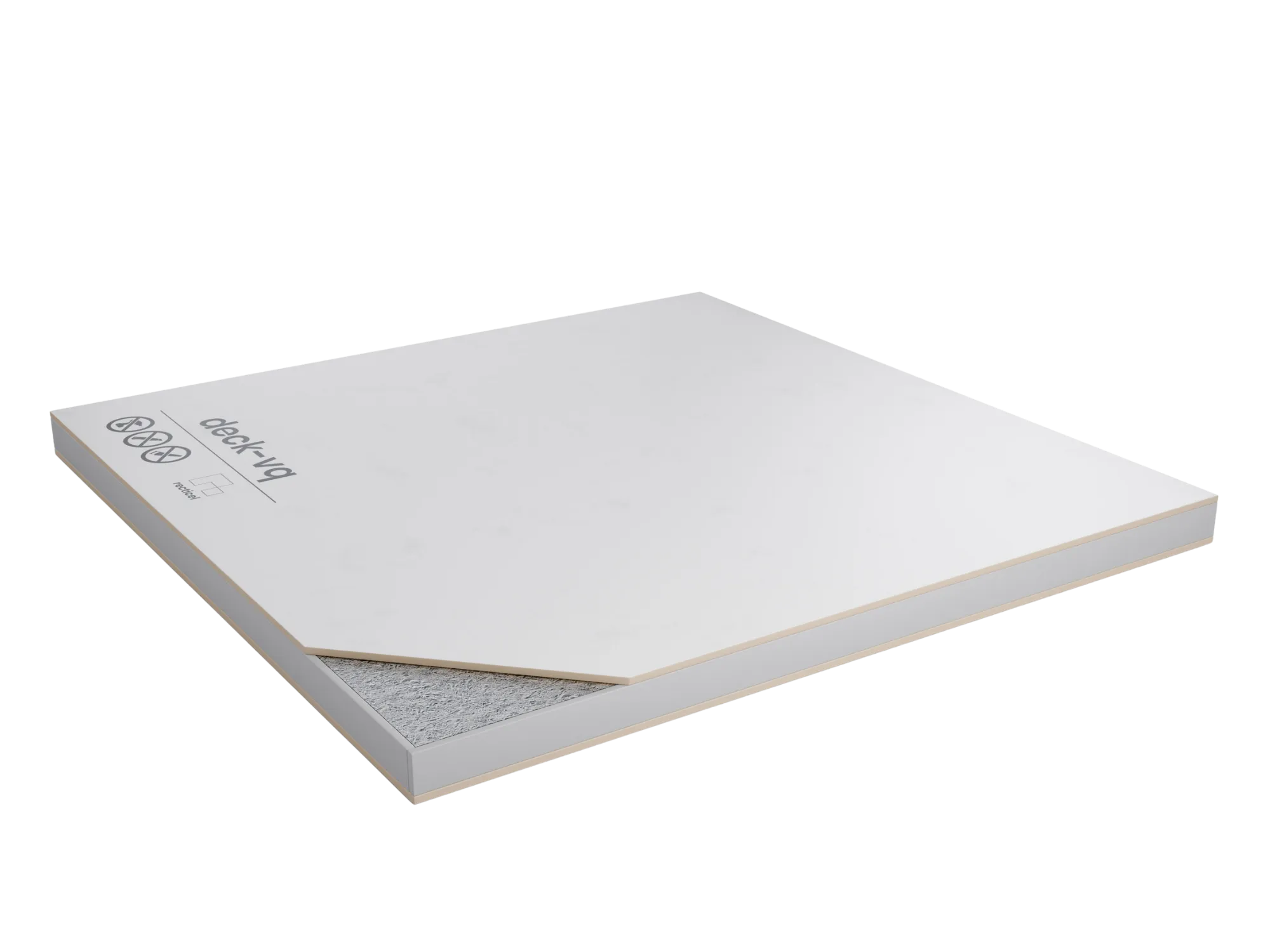
Deck VQ is that option. Our vacuum insulation panel product achieves thermal resistance values that would require significantly greater thickness from any conventional insulation - PIR included. The result is a UFH build-up that can meet or exceed the required R-value while adding a fraction of the height, keeping transitions manageable, thresholds compliant, and the overall floor level where it needs to be.
Deck VQ panels are robust enough to sit beneath a screed and carry the imposed loads of a finished floor and Gradient's technical team can advise on specification, detailing, and how to integrate them into your overall build-up alongside any other insulation layers where relevant.
If build-up depth is the constraint that's making a UFH retrofit difficult to justify, Deck VQ is worth a conversation.