Why is flat roof insulation important for compliance?
While walls and windows often get the most attention, flat roofs represent one of the most significant opportunities to improve a building’s thermal efficiency. Their large surface areas, exposure to weather, and potential for heat loss make them a key focus for architects, designers, and energy assessors.
A correctly insulated flat roof can:
- Prevent thermal bypass, reducing heat loss and lowering overall energy bills.
- Minimise condensation risk and cold spots, improving indoor air quality and occupant comfort.
- Enhance airtightness and support continuity across the building envelope.
- Contribute to lower U-values, supporting compliance with Part L, Section 6, and anticipated Future Homes targets.
More importantly, getting it right the first time avoids complex and disruptive retrofits. Once a roof is complete, increasing insulation thickness can mean raising upstands and parapets, modifying service penetrations, or even removing the entire waterproof membrane.
That’s why specifying flat roof insulation for long-term performance isn’t just best practice. It’s essential for both compliance and the longevity of your roof.
What are the building regulations for flat roof insulation?
Under Approved Document L, new homes in England are benchmarked against a notional U‑value target of 0.11 W/m²K for roof elements. Where upgrades or retrofits are undertaken, the maximum U‑value allowed is 0.15-0.16 W/m²K, depending on the type of roof element and whether it's an existing or new element.
This forms part of a wider effort in the UK to reduce energy usage, lower carbon emissions, and prepare for net-zero targets.
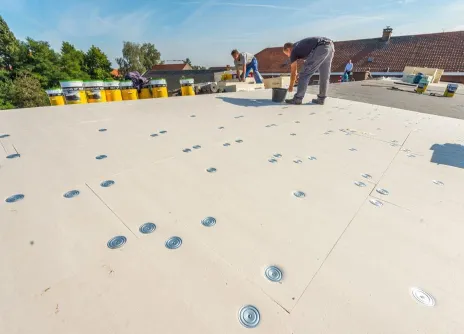
For flat roofs, compliance is typically best achieved through a warm roof insulation build-up, with the insulation layer placed above the deck and below the waterproof membrane. This arrangement helps eliminate thermal bridging, manage condensation risk with a correctly positioned vapour control layer, and improve the overall thermal resistance of the roof.
Cold flat roof insulation methods are still used in certain applications, particularly in domestic refurbishments or where warm roof construction isn’t feasible. But this method can present challenges with ventilation and condensation risk, so should be specified with care.
The importance of documentation
It's also worth noting that compliance involves more than meeting calculated U-values. It also requires documenting the process.
In England and Wales, for instance, photographic evidence of insulation works is now mandated under Part L. That's because taking photos before, during, and after installation provides a clear visual record of the works and ensures they align with energy efficiency standards.
Once the roof is complete, post-installation photos can serve as valuable evidence of quality, and may even avoid the need for invasive inspections down the line – so it's vital if you want to futureproof your roof and avoid potential remedial work.